UAE Summer and Heavy Equipment: What Actually Breaks and How to Prepare
What UAE Summer Does to Heavy Equipment
June to September in UAE is not just uncomfortable for people. It is a serious test for every machine on site. Ground temperatures hit 50 to 60 degrees in direct sun. Air temperature stays above 45 degrees for weeks. Humidity on the coast makes it worse. This is not normal operating weather for most equipment it is extreme, and machines that were running fine in February start failing in July.
Most breakdowns in UAE summer are not random. The same parts fail every year. The same mistakes get made every year. If you know what to check before summer hits, you can avoid at least half of them.
This post covers what actually breaks, why it breaks, and what to do before the temperature climbs.
Hydraulic Systems: The First Thing to Check
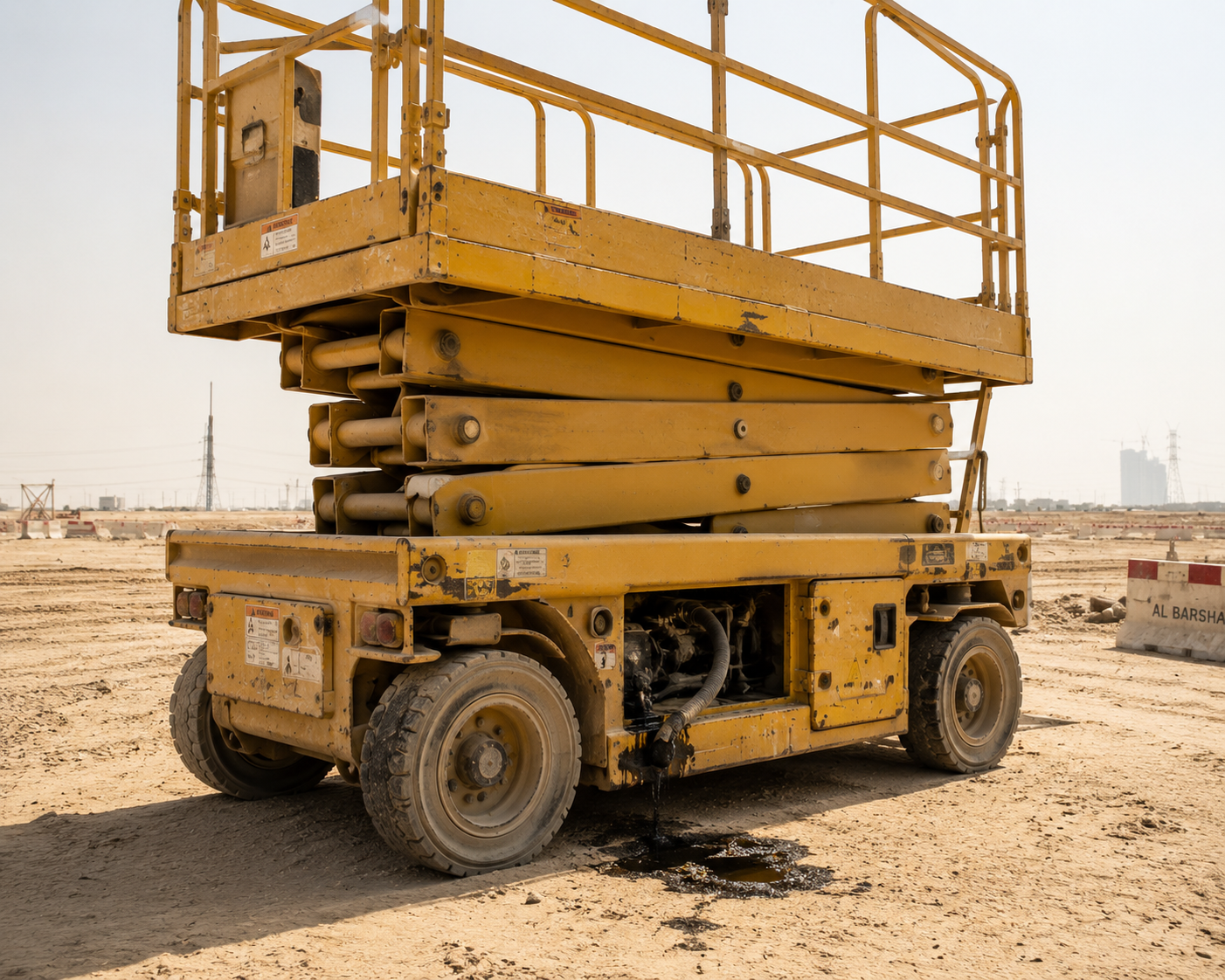
Hydraulic pipes and hoses are the most common failure point in UAE summer. The reason is simple. Hydraulic systems run hot during normal operation. Add 45 degree ambient heat and direct sun on the machine body, and the fluid temperature inside the system goes well beyond the designed operating range.
When hydraulic fluid gets too hot it loses viscosity it becomes thinner. Thin fluid does not lubricate properly. It causes wear on pumps, valves, and cylinders faster than normal. Over time, this becomes a breakdown.
The hoses are the visible sign. In extreme heat, rubber hoses that are old or already weakened start to sweat you can see moisture or oil weeping through the surface. If you see that, the hose is about to fail. Replace it before the machine goes to site, not after it fails 50 feet in the air.
Check all hydraulic hoses before summer. Look for cracks, swelling, soft spots, and any sign of leaking at the fittings. Check the hydraulic fluid level and condition. If the fluid is dark or smells burnt, change it. Check that the hydraulic oil cooler is clean a clogged cooler cannot bring the temperature down no matter how good the rest of the system is.
Do not wait for a breakdown to check these things. In summer, a hydraulic failure on site means the machine cannot move, the job stops, and recovery takes hours. The cost of checking is nothing compared to the cost of that.
Batteries and Electric Machines: The Heat Problem
Electric machines — scissor lifts, electric boom lifts, electric forklifts run on batteries. Batteries do not like heat. This is well known in the industry but it is still one of the most common reasons electric machines stop working on summer sites in UAE.
Heat accelerates the chemical reactions inside a battery. This drains charge faster than normal. A battery that lasts a full shift in winter might last half a shift in July. The machine does not break it just runs out of power faster than expected.
The bigger problem is long-term damage. Repeated exposure to high temperatures degrades battery capacity permanently. A battery that has been through two or three UAE summers without proper care will hold significantly less charge than when it was new. That means shorter working hours and more frequent charging, which adds time and cost to every job.
Keep electric machines in shade whenever possible before work, during breaks, after work. If there is a covered area on site, that is where the electric machine parks. Charge batteries overnight when temperatures are lower, not in the middle of the day when ambient heat adds to the charging heat. Check battery terminals for corrosion heat accelerates terminal oxidation and a corroded terminal means poor connection and inconsistent power delivery.
If you are renting an electric machine for a summer project, ask the rental company about the battery age and condition before the machine comes to site. A machine with an old degraded battery will not give you a full day of work.
Tyres: What 50 Degree Ground Does to Rubber
Ground temperature in UAE summer is not the same as air temperature. On a black asphalt surface in direct sun, ground temperature can exceed 70 degrees. Tyres sitting on that surface, carrying the weight of a machine, heat up fast.
For pneumatic tyres, heat means pressure increase. A tyre that was correctly inflated in the morning will be over-inflated by midday on a hot surface. Over-inflated tyres have a smaller contact patch with the ground, which reduces stability important on any machine but critical on forklifts and MEWPs where stability directly affects safety.
For solid rubber tyres, which are common on forklifts and indoor MEWPs, heat causes the rubber compound to soften. Soft rubber wears faster and on very hot surfaces can begin to mark the floor a problem on any site with finished flooring.
Check tyre pressure in the morning before the machine starts working. Check again at midday. Do not inflate tyres to the maximum rated pressure in summer they will exceed it by midday. If you are unsure of the correct inflation range for your machine, check the operator manual or ask the rental company before the machine goes to site.
Always check tyres for cracking before summer. Heat cycling the machine sitting in the sun, then working, then sitting again causes rubber to crack over time. Cracked tyres on a loaded machine are a safety risk.
Engine Overheating: When the Machine Just Stops
Diesel engines on heavy equipment are designed to handle heat but they have limits. When an engine overheats, the machine shuts down automatically to prevent damage. On a construction site in the middle of a lift or a transfer, that is a serious problem.
The most common cause of overheating is not the heat itself it is a cooling system that is not clean. The radiator collects dust, sand, and debris during normal operation. In UAE, where the air is full of fine sand, radiators clog faster than in other climates. A clogged radiator cannot move enough air to cool the coolant. The coolant temperature climbs. The engine shuts down.
Clean the radiator before summer and check it monthly through the hot months. Use compressed air to blow out dust from the fins do it from the inside out, not outside in, so you push the debris out rather than deeper in. Check coolant level and condition. Old coolant loses its heat transfer properties and its corrosion inhibitors. If the coolant is more than two years old or looks brown instead of green or orange, replace it.
Check the cooling fan and fan belt. A belt that is slightly loose will slip under load, reducing fan speed, reducing airflow through the radiator. In normal weather this might go unnoticed. In UAE summer it becomes an overheating problem.
Check the engine oil level and condition. Oil also helps cool the engine. Low oil or old thick oil adds heat to the system. Change oil before summer if it is due, and check the level every day during hot months.
Cooling Systems: The Part Everyone Ignores Until It Fails
The cooling system on a heavy machine is not just the radiator and coolant. It includes the hydraulic oil cooler, the intercooler on turbocharged engines, the air filter system, and the cab climate system if the machine has an enclosed cab.
All of these work harder in summer. All of them need to be checked before summer starts.
The air filter is especially important in UAE. Fine desert sand gets into everything. A clogged air filter restricts airflow to the engine, which reduces combustion efficiency, increases fuel consumption, and adds heat. Check and clean the air filter every week in summer, not once a month like the standard schedule.
If the machine has an operator cab, check the air conditioning before summer. An operator working in a cab with no AC in 45 degree heat cannot concentrate properly. Concentration failures cause accidents. AC is not comfort on a heavy machine in UAE summer, it is a safety requirement.
The Pre-Summer Checklist
Before June, go through every machine with this list.
Hydraulic system: check all hoses for cracks, swelling, and leaks. Check fluid level and condition. Clean the hydraulic oil cooler.
- Coolant: check level and condition. Replace if more than two years old or discoloured.
- Engine oil: check level and condition. Change if due.
- Air filter: clean or replace. Check again every week through summer.
- Radiator: clean fins with compressed air. Check for damage or blockage.
- Cooling fan and belt: check belt tension and condition. Check fan for damage.
- Tyres: check pressure and condition. Look for cracking. Adjust inflation for summer heat.
- Battery (electric machines): check charge capacity, terminal condition, and age. Arrange shade and overnight charging on site.
- Air conditioning (if applicable): test before summer. Repair any issues before the machine goes to site.
Do this check once before summer starts. Then do a shorter check every month through the hot season. The machines that break down in July are almost always the ones that were not checked in May.
Contact Us
If you have a machine that needs a summer check before it goes to site, or if you are looking to rent equipment for a summer project in UAE and want advice on what to send, contact us before you book.
Reach us at [email protected] or call +971 55 203 3746.