Scissor Lift vs Boom Lift: Which One Do You Actually Need
Check the Site Before You Call Anyone
Most people call the rental company first and check the site second. That is the wrong order.
By the time the machine arrives and the operator sets it up, you have already paid for delivery. If the machine cannot work on your site, you pay for the return too. The job is delayed. Your budget takes a hit. And all of it was avoidable if someone had looked at the site properly before picking up the phone.
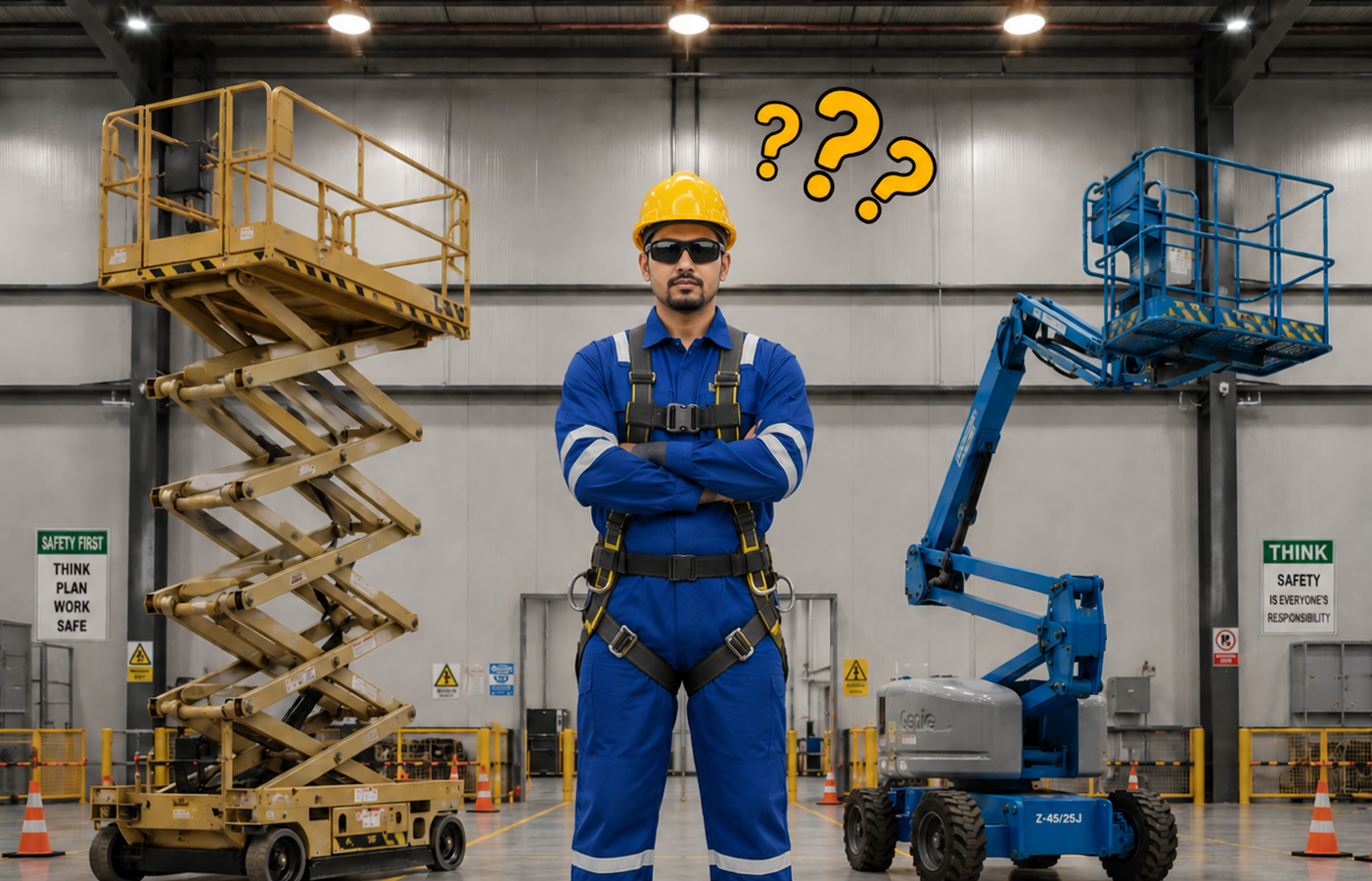
Scissor lift or boom lift the decision is not about price or preference. It is about what your site will actually allow. Get that wrong and the cheaper machine becomes the more expensive one.
What a Scissor Lift Is and Where It Works
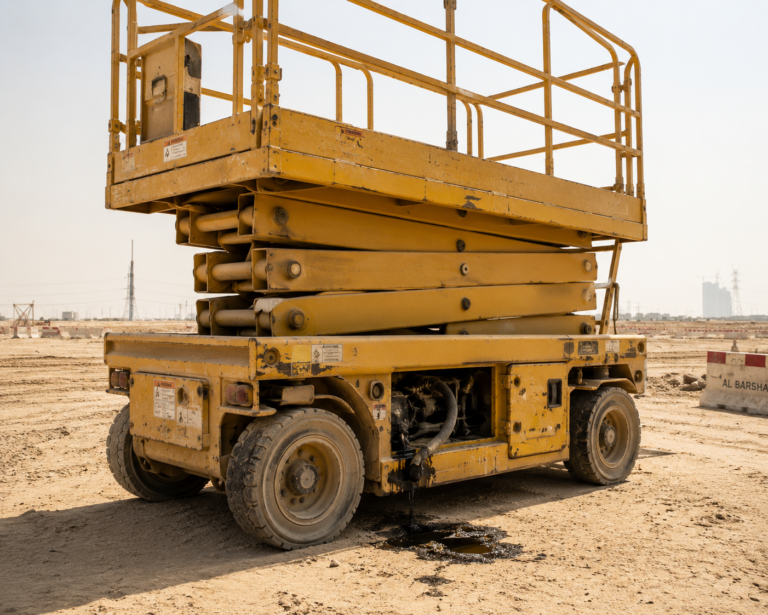
A scissor lift is a platform that goes straight up. That is it. It lifts vertically, the platform stays flat, and you work directly above where the machine is parked. You can say it is a ladder for two people but safer and more stable. It holds two people with tools and gives them a solid flat platform to work from.
Scissor lifts are common in warehouses, shopping malls, hotels, factories, and any indoor space where the work is directly above the machine position. AC duct installation, lighting, ceiling painting, fire sprinkler systems these are all scissor lift jobs.
The machine itself is compact. Electric scissor lifts are quiet, produce no fumes, and have a small footprint. Diesel scissor lifts are for outdoor use where the surface is harder and the environment can handle engine noise.
But the scissor lift has real limits. It only goes up. It cannot reach over an obstacle, it cannot extend horizontally, and it cannot work where the ground is uneven or where there are stairs or ramps between the parking point and the work area. If the floor is not flat and solid, the scissor lift either cannot operate safely or cannot reach the work point at all.
What a Boom Lift Is and Where It Works
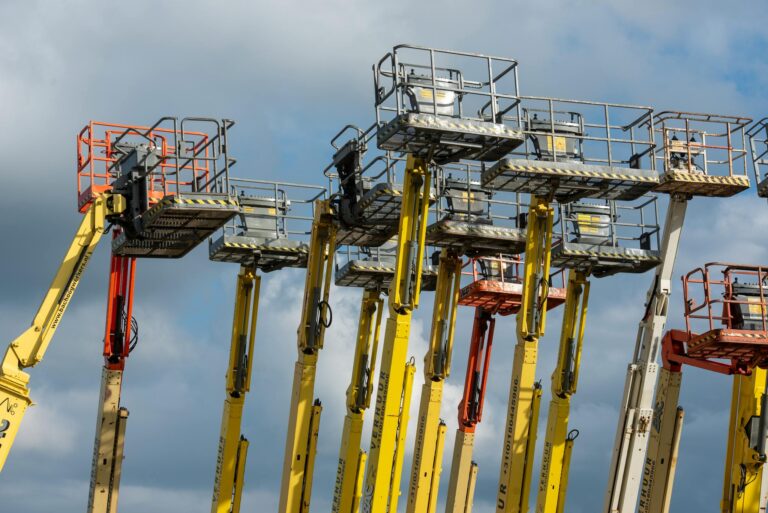
A boom lift also called a manlift or aerial work platform has an extendable arm. That arm can reach up, over, and out. The platform at the end of the arm can position a worker at a point that is not directly above the machine. This is the fundamental difference and it matters on almost every real site.
Boom lifts come in two types. A telescopic boom lift extends straight out like a telescope maximum horizontal reach, good for open outdoor jobs. An articulating boom lift has joints in the arm that let it bend around obstacles useful for reaching over barriers, around corners, or into spaces where a straight arm cannot go.
Both types need more space than a scissor lift. The machine is larger, it weighs more, and when the boom is extended the machine needs clear space around it so the arm can move without hitting anything. This is not a problem on open sites. On tight urban sites in UAE, it is something you need to check before the machine arrives.
The Real Differences That Matter on Site
Height is not the main factor. Both machines come in a wide range of heights. A scissor lift can reach 12 to 18 metres on most standard models. A boom lift can reach 20 to 45 metres depending on the type. If your job is at 10 metres, both can technically do it. The question is which one can actually reach the work point from where it can park.
Horizontal reach is where they separate. A scissor lift has zero horizontal reach — the platform is directly above the machine. A boom lift can extend 10, 15, even 20 metres horizontally depending on the model. If the work point is over an obstruction, or if the machine cannot park directly below the work area, a scissor lift cannot do the job. A boom lift can.
Ground condition is the second separator. A scissor lift needs flat, solid, level ground. Even a small gradient or soft patch can make it unsafe to operate. A boom lift, especially a rough terrain model, can handle uneven ground, gravel, and outdoor construction sites that a scissor lift cannot.
Width and access is the third. A scissor lift is narrower and easier to get through doorways and into tight spaces. Some scissor lifts are narrow enough to fit through a standard double door. A boom lift needs more width to enter a site and more clearance overhead when the arm is moving.
When the Site Makes the Decision for You
There are situations where the site removes the choice entirely.
If the machine has to park 3 to 4 metres away from the wall and the work is on the wall or above it, a scissor lift cannot reach the work point. The platform only goes up it cannot reach sideways. A boom lift parks away from the wall and extends the arm across to reach the exact point. This is one of the most common situations where the wrong machine gets sent to site.
If the site has stairs, ramps, or uneven ground between the entry point and the work area, a scissor lift cannot cross them. Scissor lifts are not designed for rough terrain. Some outdoor diesel models handle mild gradients but anything with actual steps or severe slopes stops the machine. A rough terrain boom lift can handle this.
If the work area is over an obstacle a conveyor belt, a machine, a built structure a scissor lift cannot reach above it from a safe distance. An articulating boom lift can bend over the obstacle and position the platform on the other side.
If the site is indoors and the ceiling is low, a large boom lift cannot fit. Some articulating boom lifts fold down enough to enter a space with a 2 to 2.5 metre clearance, but you need to confirm that before the machine comes.
None of these things are complicated to check. But you have to check them before you book, not after the machine arrives.
Ask for a Site Inspection Before You Book
If you are not sure which machine fits your site, do not guess. Ask the rental company to send someone to look at the site first.
This costs nothing in most cases. It saves you the delivery charge, the return charge, and the delay of sending the wrong machine. If a rental company refuses to do a site visit for a job of any real size, that is a sign they are guessing too.
Even if a site visit is not possible, send photos. Photos of the access point, the work area, the ground condition, and the distance between where the machine would park and where the work needs to happen. A rental company with real field experience can make a good decision from photos. What they cannot do is make a good decision from a phone call where the only information is “I need a lift to 10 metres.”
Check the site yourself first. Write down the height, the distance from the nearest flat parking area to the work point, the ground condition, the access width, and whether there are any obstacles between the machine and the work. Then call the rental company with that information. You will get the right machine the first time.
Contact Us
If you have a job and you are not sure whether a scissor lift or a boom lift is the right call, contact us before you book. Send us the site details height, distance, ground condition, access and we will tell you exactly what fits.
We can also arrange a site visit if the job requires it.
Reach us at [email protected] or call +971 55 203 3746.